
The transition into April marks a critical countdown for marketing departments and event coordinators eyeing the summer 2026 circuit. As the weather warms up, the competition for floor space and attendee attention reaches a fever pitch.
This year, the “more is better” philosophy has been replaced by a “quality over quantity” mandate. Exhibitors are no longer satisfied with simply being present, and rightfully so. Now they are demanding measurable ROI and deeper engagement from every square foot of their booth.
A standard exhibit and a show-stopping destination comes down to the technology used to bridge the gap between a brand and its audience. The following guide is designed to audit your current approach and ensure you are ready for the busiest months of the year.
Major Summer Trade Show Events and the Shift Toward High-Impact Exhibiting
Summer 2026 marks a turning point where exhibitors are prioritizing high-engagement experiences over massive, empty floor space to maximize their marketing spend.
As logistical costs rise and travel budgets are scrutinized, the industry is seeing a consolidation of effort toward anchor shows that promise the highest concentration of decision-makers. This trend has led to a more competitive floor environment where standing out requires an interactive strategy that justifies the attendee’s time.
InfoComm 2026 in Las Vegas is the premier destination for pro-AV and integrated experiences.
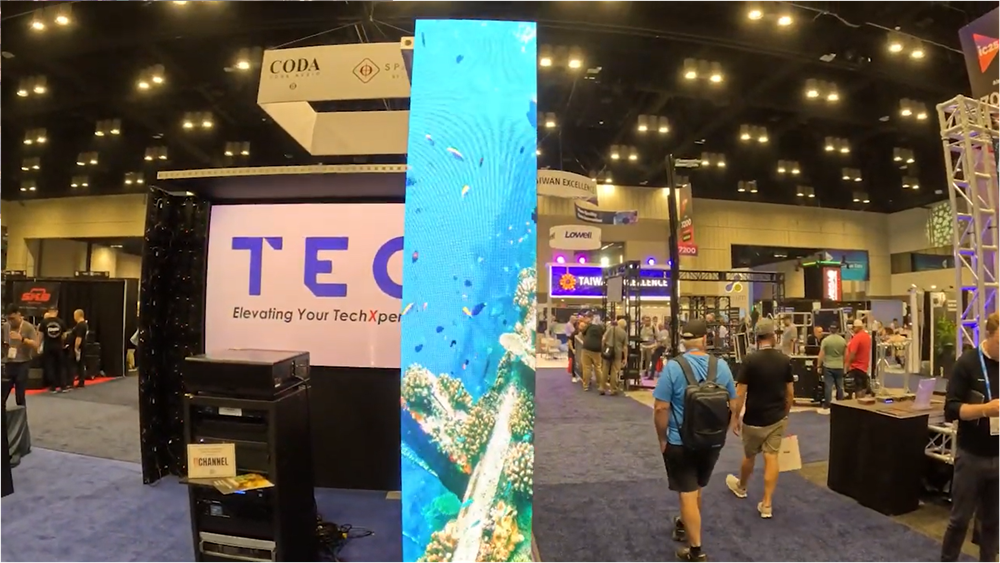
Scheduled for June 13–19, InfoComm 2026 remains the most influential event for the audiovisual industry, drawing a crowd that is inherently tech-savvy and difficult to impress. Because the audience consists of integrators, designers, and manufacturers, the wow-factor bar is set significantly higher than at a standard consumer trade show.
These attendees don’t only want to see technology but to be able to touch it, test its latency, and understand its integration capabilities.
Exhibiting here requires a display that can double as a technical demonstration. Using a large-format touchscreen like Padzilla allows AV professionals to see mobile applications or control software on a scale that makes collaborative viewing possible.
Instead of huddling three people around a tablet, you can host a group of twelve, all watching a crisp, lag-free interaction. In the cavernous halls of the Las Vegas Convention Center, visibility is currency, and a six-foot-tall glowing smartphone interface is an undeniable magnet for the pro-AV crowd.
ASCO Chicago remains the gold standard for clinical oncology and healthcare engagement.
From May 29 to June 2, the American Society of Clinical Oncology (ASCO) annual meeting will take over Chicago, bringing together the world’s leading experts in cancer care. The environment at ASCO is markedly different from the high-energy tech shows; it is professional, data-driven, and focused on clarity of information.
Trade show exhibitors include pharmaceutical giants and biotech startups, all of whom need to present complex clinical trial data in a way that is both digestible and compliant.
Interactivity in this space is less about flashy graphics and more to with navigation and accessibility. A giant touchscreen allows a physician to tap through different stages of a trial or zoom into high-resolution cellular imaging without losing the context of the larger presentation.
It transforms the booth from a static information dump into a research hub. When space is at a premium in McCormick Place, having a single interactive kiosk that can hold thousands of pages of research, interactive charts, and video testimonials is a strategic necessity for a clean, professional aesthetic.
Cosmoprof North America Las Vegas continues to dominate the global beauty and logistics sector.
Cosmoprof, happening July 13–15, 2026, is expected to draw over 17,304 attendees to Las Vegas, focusing on everything from raw materials to finished retail products. This show is a sensory powerhouse where aesthetics are everything.
Brands are competing for the attention of distributors and retailers who see hundreds of products a day, meaning your booth must convey a sense of modern sophistication and retail-readiness.
Digital interaction is the secret weapon for beauty brands at Cosmoprof. By using a touchscreen kiosk, a skincare brand can allow users to take “skin quizzes” on a giant scale or browse a full digital catalog that isn’t yet available on the shelves.
And because the beauty industry thrives on social media, these giant displays also serve as the perfect backdrop for Instagrammable moments. They encourage attendees to take photos and videos that extend your brand’s reach far beyond the convention center walls.
2026 Summer Show Snapshot
| Event Name | Dates | Location | Core Audience | Expected Impact |
| ASCO Annual Meeting | May 29 – June 2 | Chicago, IL | Oncologists, Researchers | High (Data & Clinical) |
| InfoComm 2026 | June 17 – 19 | Las Vegas, NV | AV Tech, IT Managers | Very High (Tech Demo) |
| Cosmoprof NA | July 13 – 15 | Las Vegas, NV | Beauty, Retail, Supply | High (Aesthetics/Retail) |
| Summer Tech Expo | August 5 – 7 | Austin, TX | Startups, VCs, Devs | Medium (Networking) |
How to Conduct a Comprehensive Summer Trade Show Audit to Maximize ROI
A successful summer season begins with a rigorous audit of your current assets to identify where your strategy is leaking potential leads and engagement.
Before committing your remaining 2026 budget to booth space and travel, you must objectively evaluate whether your current setup can meet the heightened expectations of a selective, tech-savvy audience.
This audit is a strategic deep dive into your hardware, messaging, and human resources to make sure every element of your presence is optimized for a high-intensity environment.
Evaluate your previous show data to set realistic 2026 benchmarks
The first step in any meaningful audit is looking backward to see where your previous investments yielded the highest return. In 2026, where marketing budgets are under tighter scrutiny, gut feelings about which shows performed well are insufficient to justify an exhibit.
You need to pull hard data from your Q3 and Q4 shows of the previous year, focusing specifically on the cost-per-lead (CPL) and the quality of those leads. If you noticed a drop-off in engagement during mid-day slumps, it suggests your booth lacked a passive engagement tool to capture interest when your staff was busy or on break.
Setting realistic benchmarks for 2026 requires adjusting for the current quality-over-quantity trend. Total foot traffic numbers are becoming less relevant than qualified interaction time—the duration a high-value prospect spends engaged with your brand’s content.
If your previous average was two minutes of talk time, your goal for the summer circuit should be to increase this by at least 50% through better storytelling and interactive touchpoints. It’s a historical analysis that provides the baseline you need to determine if your current booth strategy is growing (or stagnating).
Assess the physical limitations of your current booth hardware.
A lot of companies are still relying on booth hardware purchased several years ago, which can inadvertently signal to attendees that your brand is behind the curve. As you audit your physical assets for the summer, look specifically for signs of tech fatigue, e.g., small, low-resolution monitors, bulky enclosures, or static signage that can’t be updated in real-time.
At InfoComm or Cosmoprof, your hardware is the first visual handshake you have with a customer; if it looks dated, they will assume your product is, too.
As such, you have to evaluate your hardware not just for its appearance but for its functional versatility. Does your current setup allow for a 1-to-many demonstration, or is it limited to a 1-to-1 interaction? Large-format displays solve the physical limitation of ‘crowd huddling,’ where only the person standing directly in front of a tablet can see what’s happening.
If your hardware forces prospects to wait in line just to see a screen, you are effectively pushing them toward your competitor’s booth. Your audit should identify these physical bottlenecks so they can be replaced with more scalable interactive kiosks.
Identify the engagement gap between your staff and your visitors.
One of the most common failures in trade show strategy is the “engagement gap,” the awkward period where a visitor is interested in a product but hesitant to talk to a salesperson. This results in a “fly-by,” where the prospect walks past the booth, takes a quick look, and keeps moving to avoid a high-pressure sales pitch.
Your audit must determine how many of these missed opportunities occur over a typical show day. If your staff spends more time talking to each other than to visitors, the barrier to entry for your booth is likely too high.
Closing this gap requires a low-friction entry point, such as a giant touchscreen kiosk that allows the visitor to engage on their own terms first. This serves as a psychological buffer; the attendee can start exploring your product or service through a familiar mobile-style interface, giving your staff a natural opening to approach with a helpful comment rather than a cold pitch.
Determine if your visual messaging aligns with 2026 digital trends.
Visual trends move fast, and what looked modern eighteen months ago can feel remarkably old-web in 2026. The shift toward vertical video, high-definition motion graphics, and minimalist UI design has changed how people consume information.
If your booth graphics are cluttered with too much text or your digital demos use old-school navigation menus, you are fighting an uphill battle for attention. Your audit should ideally include a review of all your digital assets to ensure they are optimized for large-scale, high-contrast viewing.
- Audit your typography: Make sure all key messages are readable from at least ten feet away.
- Check your color contrast: Bright, saturated colors that pop on a backlit LED screen are essential in the dimly lit halls of major convention centers.
- Verify your “Three-Second Rule”: A passerby should understand your core value proposition within three seconds of looking at your main display.
- Evaluate interactivity levels: Moving beyond simple “next” buttons to gesture-based controls or multi-touch interfaces aligns with modern user expectations.
Align your booth size with your actual staffing capabilities.
A common mistake exhibitors make is over-buying floor space without having the staff to adequately cover it. A 20×20 booth that only has two employees looks empty and uninviting, while a 10×10 booth with the same two employees looks like a bustling hub of activity. Your summer trade show audit must reconcile your ambitious floor plans with the reality of your travel budget and team availability.
If you find that you are short-staffed for a major event like ASCO, you must look for ways to automate portions of your booth presence.
Interactive kiosks act as digital staff members that never need a lunch break and can handle multiple queries simultaneously. You can place a Padzilla at the corner of a 10×20 booth to effectively manage the overflow of traffic when your human staff is occupied with deep-dive meetings.
This allows you to maintain a high level of presence and lead capture without the overhead costs of flying in more personnel or paying for extra hotel rooms in expensive cities like Las Vegas.
Calculate the true cost of shipping vs. local interactive rentals.
Logistics are often the single largest “hidden” cost of a summer trade show tour. When you audit your shipping and drayage invoices from previous years, you may be shocked at how much you are paying just to move heavy, static assets from Chicago to Las Vegas and back again.
Shipping large custom kiosks or heavy monitors also carries a high risk of damage, which can lead to emergency repair costs on the show floor. In 2026, the savvy move is to minimize the physical weight of your booth by shifting toward local rentals.
Renting interactive hardware allows you to bypass the most expensive parts of the logistics chain. Instead of shipping a three-hundred-pound crate, you simply show up and have the hardware waiting for you, professionally installed and tested. This approach also provides much-needed flexibility for companies exhibiting at multiple shows in a short window.
You can run the same digital content on a rented kiosk in Chicago one week and an identical one in Las Vegas the next for brand consistency, without the logistical nightmare of a cross-country freight haul.
Review your lead capture flow for friction points.
The ultimate goal of any trade show is lead generation, yet many booths still use fragmented or slow systems to capture attendee data. If your process involves scanning a badge and then manually typing notes into a separate app, or, heaven forbid, collecting paper business cards, you are losing valuable data and slowing down your booth’s throughput.
Your audit should examine every step of the lead-to-CRM journey to see where prospects are losing interest or where data is being corrupted.
An optimized lead capture flow is integrated directly into your interactive demo. Using a large-format touchscreen allows the visitor to enter their own information at the end of a successful demo, which is often more accurate and complete than a staff member’s hurried notes.
Furthermore, because the data is captured digitally and instantly, you can trigger automated “thank you” emails or follow-up materials before the attendee even leaves the convention floor. This level of speed is what separates top-tier exhibitors from those who wait two weeks to follow up, by which time the lead has already gone cold.
Large-Format Interactive Displays: Transforming Booth Engagement
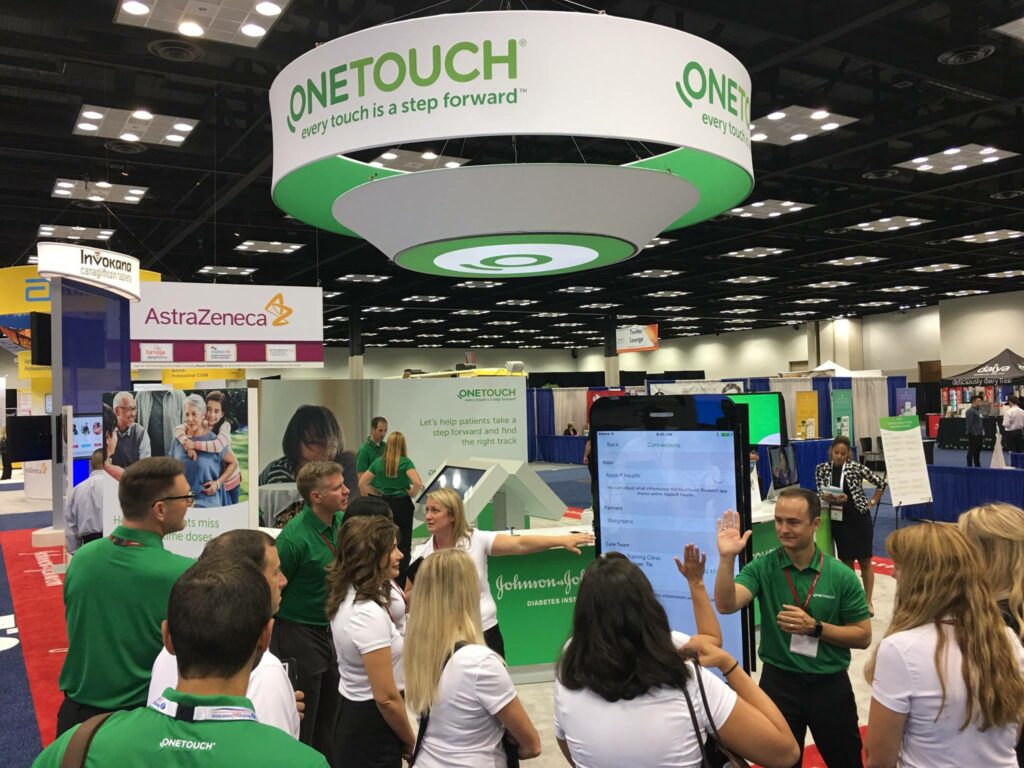
Integrating Padzilla’s giant touchscreen kiosks into your booth transforms passive onlookers into active participants by leveraging the familiarity of mobile interfaces on a grand scale. The biggest challenge is getting people to stop their momentum and stay long enough to hear your story.
Interactive technology acts as a powerful anchor; it shifts the dynamic from a one-way sales pitch to a two-way exploration that empowers the attendee.
Bridge the gap between mobile apps and physical booth presence.
Modern brands have spent years and millions of dollars perfecting their mobile application experience, yet they often struggle to translate that digital excellence into a physical trade show environment. When you use a Padzilla kiosk, you are essentially taking the exact user experience your customers already love and enlarging it to a scale that demands attention.
This removes the interface friction that kills engagement because the attendee already knows exactly how to interact with your booth. They don’t need a tutorial on how to use a custom-built, proprietary interface; they simply swipe, tap, and pinch-to-zoom just as they do on their own smartphones.
This familiarity is a psychological green light for attendees who might otherwise be intimidated by complex booth setups. Presenting your brand through the lens of a giant, high-functioning mobile device, you create an immediate sense of accessibility.
For software-as-a-service (SaaS) companies exhibiting at events like InfoComm, this means you can demonstrate your actual product in its native environment as opposed to relying on pre-recorded “hero” videos that feel disconnected from the reality of the user experience.
Use giant touchscreens to facilitate self-guided product tours.
The modern trade show attendee is increasingly protective of their time and prefers to gather information independently before engaging with a sales representative. Setting up interactive kiosks that offer comprehensive, self-guided tours provides a pressure-free environment for prospects to qualify themselves.
A visitor can spend three minutes navigating through your product’s key features, watching specific case study videos, and viewing pricing tiers at their own pace. This self-service model ensures that by the time a staff member does step in, the prospect is already informed and has more specific, high-value questions.
Create a “stop and stare” effect in high-traffic trade show aisles.
In massive venues like the Las Vegas Convention Center, visual competition is absolute, and a static banner simply cannot compete with the luminous pull of a 70-inch or 80-inch vertical touchscreen. The sheer scale of a Padzilla unit creates a natural focal point that can be seen from several aisles away, acting as a lighthouse for your brand.
Human eyes are naturally drawn to movement and light, but they are particularly captivated by mismatched scale—that is, seeing a familiar object like a smartphone rendered at the size of a human being. It creates an immediate “stop and stare” effect that effectively disrupts the convention fog that sets in after an attendee has been walking the floor for several hours.
Simplify complex technical demonstrations through interactive storytelling.
For exhibitors at technical or medical shows like ASCO, the challenge is how to present highly complex data in a way that is visually compelling. Giant touchscreens allow you to layer information, moving from a broad “big picture” overview to granular technical details with a single tap.
You can show a high-level animation of a biological process or a software architecture and then allow the user to drill down into the specific nodes or data points that interest them. This interactive storytelling keeps the audience engaged far longer than a linear slideshow because the viewer is the one controlling the narrative flow, making the information much more likely to be retained.
Integrate your existing CRM directly with on-floor interactive kiosks.
The value of an interactive display is in the back-end data collection that fuels your post-show sales funnel. Padzilla units can be configured to integrate directly with your existing CRM platforms, such as Salesforce or HubSpot, so that every interaction is logged and every lead is captured in real-time.
Instead of collecting badges and trying to remember which person was interested in which product, the kiosk can prompt the user to “sign up for a demo” or “request a quote” directly on the screen. It creates a seamless transition from the physical event to your digital marketing automation, drastically reducing the lead decay that occurs when data entry is delayed by days or weeks.
Reduce booth staff burnout through automated information hubs.
Trade shows are grueling for staff, and their energy levels naturally dip as the days progress, leading to missed opportunities during the final hours of a show. Provide a consistent, high-energy pitch that never gets tired, never misses a key talking point, and never forgets to ask for a contact email. By what, you ask? Using interactive kiosks as automated information hubs.
This allows your best sales talent to focus their limited energy on the most sales-ready prospects while the kiosks handle the initial education and data gathering for the general crowd. It changes the role of your staff from information booth attendants to strategic consultants, maximizing their value and reducing the physical and mental toll of a three-day exhibition.
Interactive vs. Traditional: A Strategic Comparison
| Feature | Traditional Static Signage | Padzilla Interactive Kiosk |
| Engagement Level | Passive (Reading/Viewing) | Active (Touching/Exploring) |
| Information Density | Low (Limited by surface area) | Infinite (Layered digital menus) |
| Lead Capture | Manual (Badge scanning/Cards) | Automated (On-screen forms/CRM sync) |
| Versatility | Permanent (Requires re-printing) | Dynamic (Instant content updates) |
| Visual Impact | Moderate (Ambient light dependent) | High (Self-illuminated/Large scale) |
| Analytics | Estimated (Foot traffic counts) | Precise (Click-tracking/Time on page) |
As we look toward the execution phase of your summer strategy, it becomes clear that the hardware you choose is a functional extension of your sales team.
The Future of Interactive Exhibiting
As you finalize your summer show audit for 2026, remember that the most successful exhibitors are those who prioritize flexibility and high-impact engagement over sprawling, empty floor space.
Utilizing Padzilla’s giant touchscreen kiosks allows your brand to remain agile, updating content in real-time to match your specific audience. This approach builds a layer of brand authority and technical sophistication that stays with attendees long after the show floor closes.
Don’t let your booth get lost in the noise of a crowded summer circuit. Focus on building relationships and closing deals while the logistics and tech heavy-lifting are handled for you. Contact Padzilla today to secure your interactive hardware for the 2026 summer season and ensure your booth is the most talked-about destination on the map.


