
Trade show booths in 2026 are expected to engage attendees through interaction. That is already visible across major events, including the Trade Show Executive Fastest 50 Awards & Summit, where top-performing exhibits are being recognized for how they involve attendees, not merely how they look.
What’s changed is straightforward: attention is harder to earn and even harder to hold. Attendees walk into an expo hall with literal hundreds of booths, limited time, and a clear filter for what deserves their focus.
In this article, Padzilla dissects what’s driving that shift, what the data actually says about interactive booths, and why exhibitors who adapt are seeing stronger results faster.
Interactivity as the Baseline Expectation in 2026 Trade Shows
Trade show attendees expect to interact with booths, and exhibitors who fail to provide that experience can see lower engagement and weaker results.
This is less a creative preference and more a measurable shift in attendee behavior. The modern show floor rewards booths that invite participation and penalizes, so to speak, those that rely on passive viewing. Below is what’s driving that change.
Attendees now expect participation
Attendees approach trade shows differently than they did even five years ago. They’re not there to be pitched at; they want to explore, test, and engage on their own terms.
According to the Center for Exhibition Industry Research (CEIR), trade show attendees want interactive demonstrations and seek hands-on product time. That preference shows up in behavior: people slow down, step in, and stay longer when there’s something to do.
This expectation is also shaped by everyday digital habits. People are used to tapping, swiping, customizing, and controlling their experience. When a booth doesn’t offer that level of control, it feels outdated immediately.
Booth engagement directly impacts lead quality and conversion rates
Higher engagement produces better leads.
Research from Event Marketing Institute shows that engaged attendees are significantly more likely to remember a brand and take post-event action. Interaction creates a form of self-selection: the people who choose to engage are already more invested.
That changes the dynamic for booth staff. Instead of trying to qualify cold traffic, they’re talking to attendees who have already taken a step forward. Conversations start differently and they move faster.
The decline of static booths is measurable across industries
Static booths still exist, but their performance is slipping compared to interactive setups.
Industry reports consistently show lower dwell times for booths that rely on signage, looping videos, or product displays alone. Attendees glance, scan, and move on. There’s no reason to stop.
By contrast, booths that incorporate touchscreens, demos, or guided interactions report higher foot traffic and longer engagement windows. That difference compounds over a multi-day event.
Why “flashy” is losing to “meaningful” in exhibit design
Not all interaction works. Attendees have seen enough gimmicks to recognize when something is there just to grab attention.
What performs better is interaction with a clear purpose, something that helps attendees understand a product, solve a problem, or explore options at their own pace.
This is where many exhibitors are recalibrating. The focus is shifting from “How do we stand out?” to “How do we make this useful?” The booths that answer the second question tend to win both attention AND trust.
The Modern Trade Show Booth Is a Flexible Experience System
Trade show booths are now designed as modular experience systems that can adapt across events, audiences, and objectives.
This shift is driven by cost pressure, logistics, and the need for consistency across multiple shows. Exhibitors are moving away from one-off builds and toward systems that can evolve without starting from scratch every time.
Exhibits are now designed to scale across multiple shows and audiences
Exhibitors rarely rely on a single event anymore. Most teams plan for a full calendar: regional shows, industry expos, and niche conferences.
READ: Top 30+ Manufacturing Trade Shows in 2026 (Complete List by Date)
That reality changes how booths are built. Rather than creating something specific to one event, exhibitors are investing in setups that can be reconfigured depending on the space, audience, and messaging.
Modular layouts, interchangeable content, and digital layers make this possible. The booth becomes a platform as opposed to a fixed design.
Technology is replacing physical build complexity
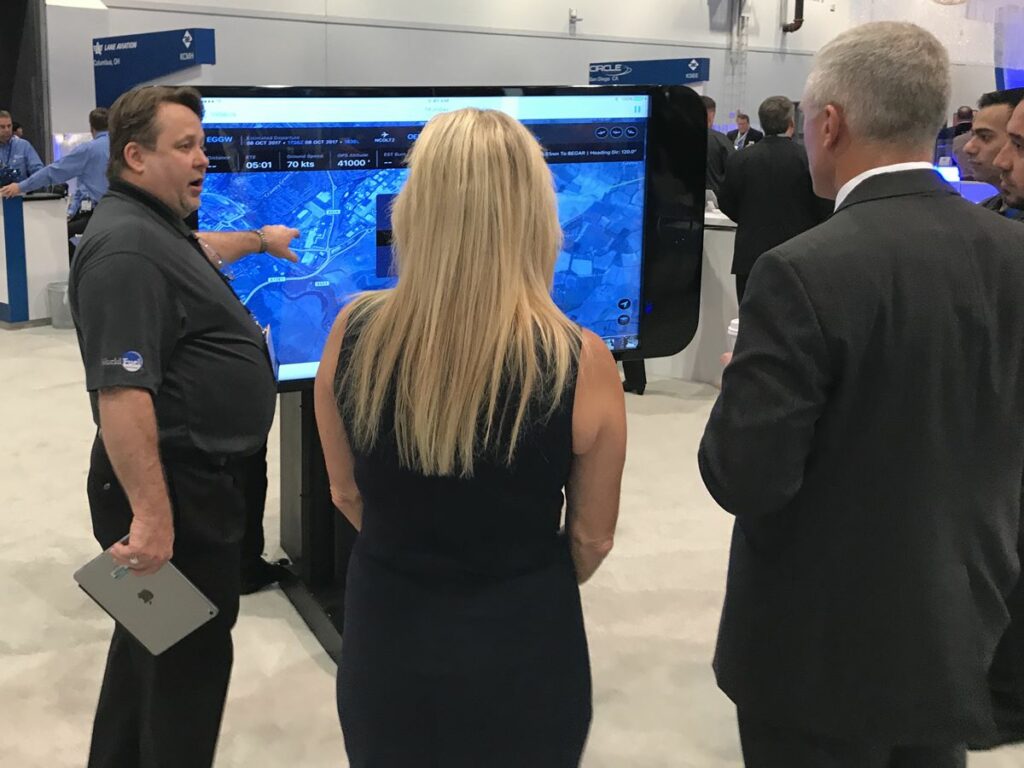
Large custom builds used to signal presence. Now, they often signal cost and logistical friction.
Shipping, storage, installation, and teardown all add up. Many exhibitors are reducing physical complexity and replacing it with digital flexibility: screens, interactive content, and software-driven experiences.
This doesn’t just lower costs as it also makes it easier to update messaging between shows without rebuilding anything.
Content, not structure, is becoming the core asset
What’s displayed in the booth matters more than the booth itself.
Interactive content can be updated, tested, and optimized across events. It allows exhibitors to refine their messaging based on real attendee behavior – what people click, explore, and spend time on.
That feedback loop doesn’t exist with static signage. Once it’s printed, it’s fixed.
Why portability and speed-to-deploy now matter more than size
Time on the show floor is limited, and so is setup time.
Exhibitors are prioritizing solutions that can be deployed quickly, require minimal technical setup, work consistently across venues, etc. A booth that takes hours to assemble or requires specialized labor introduces risk. This is especially true when schedules are tight.
Portability also affects how often a setup can be reused. The easier it is to move and install the more events it can support without added cost.
Interactive Booths Outperform Static Displays Across Key Metrics
Interactive booths consistently generate higher engagement, better lead quality, and stronger return on investment than static displays.
This is backed by measurable performance data across multiple industry studies. Exhibitors that integrate interactive elements are seeing clear gains in how long attendees stay and whether they convert after the event.
Below is what the numbers actually show.
Interactive booths increase dwell time and attendee retention
Interactive elements keep people in your booth longer, and that extra time directly improves how well your brand is understood. Longer dwell time creates more opportunities:
- More time to explore your offering
- More time for staff to engage
- More time for your message to land
Without interaction, most booths don’t get that window.
Engagement-driven experiences generate more qualified leads
Interactive trade show booths attract fewer casual passersby and more intentional participants.
Research indicates that engaged attendees are far more likely to recall a brand and follow up after the event. The key difference is participation: people who actively engage have already shown interest.
This changes lead quality in a practical way:
- Conversations start deeper into the funnel
- Staff spend less time qualifying and more time closing
- Follow-ups feel more relevant to the attendee
The result is fewer wasted interactions and more meaningful ones.
Gamification and touchscreens improve brand recall
Memory is tied to experience. When attendees interact, they retain more.
Immersive and interactive experiences significantly improve brand recall compared to passive exposure. Attendees are more likely to remember what they did than what they saw.
Touchscreens, guided demos, and interactive journeys all contribute to that effect. They turn information into an action, which is easier for the brain to store and retrieve later.
Exhibitors using interactive tech report higher ROI per event
Return on investment improves when engagement leads to better outcomes.
Exhibitors that integrate interactive technology often report stronger ROI due to higher lead conversion rates and improved post-show engagement.
This doesn’t mean spending more. It often means reallocating budget:
- Less on physical build
- More on engagement tools
- More flexibility across multiple events
Over time, that shift compounds into better performance per show.
Comparison Table: Static Booth vs Interactive Booth Performance Metrics
| Metric | Static Booth | Interactive Booth |
| Average dwell time | Low (brief stop or pass-by) | Longer engagement |
| Lead conversion rate | Lower due to passive interaction | Higher due to active participation |
| Brand recall | Limited retention | Significantly improved recall |
| Engagement level | Surface-level | Deep, self-directed exploration |
| ROI over multiple events | Declines without refresh | Improves with reusable interactive content |
This gap is why more exhibitors are shifting their strategy. The difference shows up in every meaningful metric.
Immersive Storytelling Is Replacing Product-Centric Booth Design
Trade show booths are now structured around narratives that guide attendees through an experience. The goal is to lead attendees through a sequence, one that builds understanding, relevance, and trust in a short amount of time.
Attendees remember stories, not spec sheets
Product features matter, but they’re seldom what sticks. People process information more effectively when it’s framed within a story. A structured narrative helps attendees understand not just what a product does but why it matters and where it fits.
In a crowded trade show environment, that clarity is critical. Without it, even strong products get overlooked.
Interactive storytelling builds emotional connection at scale
Storytelling becomes more effective when attendees can control the pace.
Interactive experiences allow users to navigate content based on their interests. That creates a sense of ownership over the experience, which strengthens engagement.
Instead of being told what matters, attendees discover it themselves; that difference changes how they respond.
The best booths guide attendees through a narrative journey
High-performing booths are designed with a clear flow:
- Entry point that captures attention
- Interactive layer that invites exploration
- Content that adapts to different interests
- Exit point that leads to conversation or action
This structure helps attendees move naturally from curiosity to understanding without feeling rushed or overwhelmed.
Why trust is the real currency on the show floor
Attention gets people into your booth. Trust determines what happens next.
Interactive storytelling helps build that trust by making information accessible, transparent, and relevant. Attendees can explore without pressure, which often leads to more honest and productive conversations.
That shift is subtle but it’s powerful. It changes the role of the booth from a sales pitch to a guided experience.
The Fastest Way to Transform a Booth Into an Experience Is Through Interactive Displays
Interactive displays provide a direct, scalable way to turn passive booth space into an engaging environment.
They reduce the gap between attracting attention and holding it. Instead of relying on staff to initiate every interaction, the display itself becomes the entry point.
Touchscreen technology removes friction from engagement
Touchscreens are intuitive. People don’t need instructions. They just start interacting.
This lowers the barrier to entry for engagement. Attendees can explore without committing to a conversation right away, making them more comfortable stepping in.
Once they’re engaged, the transition to a conversation becomes natural.
Large-format displays naturally attract and hold attention
Size still matters, but how it’s used matters more.
Large interactive displays combine visibility with functionality. They draw people in from a distance and give them something to do once they arrive.
That combination is what keeps traffic flowing and prevents bottlenecks.
Interactive content turns booth staff into facilitators, not gatekeepers
In traditional booths, staff control the flow of information. In interactive setups, attendees do.
This shifts the role of the team:
- Less repetition of basic information
- More time for tailored conversations
- More opportunities to respond to specific needs
It’s a more efficient use of time on both sides.
Why speed of setup matters more than custom builds
Complex builds create friction before the event even starts.
Interactive display solutions can be deployed quickly, require minimal setup, and don’t depend on large crews or long installation windows.
That flexibility matters for teams attending multiple shows in a year.
Why Renting a Padzilla Is One of the Smartest Moves Exhibitors Can Make in 2026
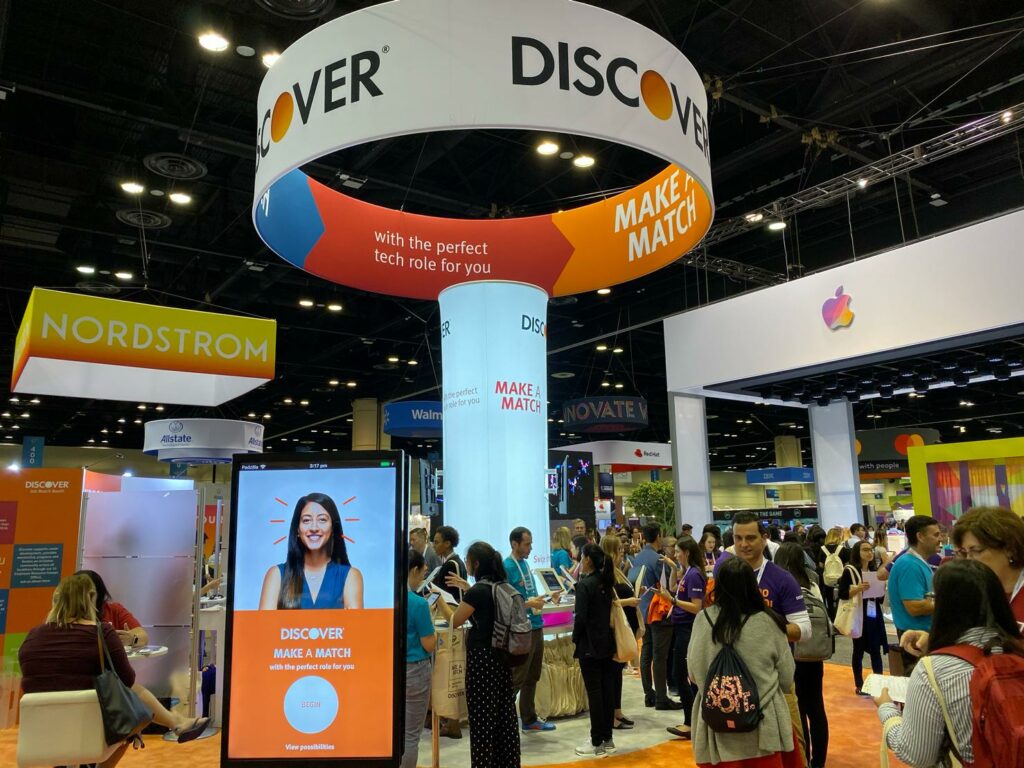
Renting a large-format interactive display is one of the fastest ways to convert a static booth into a high-performing experience without increasing operational complexity.
At this point, the question isn’t whether interactivity works as the data already answers that. The real question is how to implement it without adding cost, risk, or logistical headaches. This is where solutions like Padzilla come into the equation.
Instead of building from scratch, exhibitors are plugging into a system that’s already designed for engagement.
You eliminate the cost and complexity of custom booth builds
Custom booths come with hidden layers of cost that go beyond design and fabrication.
Shipping, drayage, storage, labor, and repairs all add up, particularly across multiple shows. Logistics and material handling can account for a significant portion of total exhibit spend, rivaling the initial build cost over time.
Renting an interactive display shifts that:
- No fabrication costs
- No long-term storage
- No maintenance between shows
- No redesign cycles for every event
It’s a cleaner model, notably for teams managing a full event calendar.
You gain a plug-and-play interactive experience instantly
A rental-based interactive display can be deployed quickly, with minimal setup and no specialized technical knowledge required. That allows teams to focus on what actually drives results: content, messaging, and engagement.
No need for weeks coordinating a build, exhibitors can walk into a show with a ready-to-use experience.
Your team can use it without technical training
Technology only works if people actually use it.
One of the common failures in booth tech is overcomplication. If trade show booth staff need training just to operate the system, it slows everything down.
Interactive displays like Padzilla are designed to be intuitive. Staff can guide attendees, navigate content, and adjust the experience on the fly without relying on a technician.
That simplicity keeps the booth running smoothly even during peak traffic.
It scales across multiple events without additional investment
Consistency across events is difficult when every booth is different. A reusable interactive system creates a stable foundation. Content can be updated depending on the audience, while the core experience remains consistent. That consistency leads to:
- Faster setup at each show
- Easier staff onboarding
- More reliable performance metrics across events
Over time, this makes it easier to refine what works and improve results.
It turns your booth into a conversation starter within minutes
Getting attendees to stop is half the battle. The other half? Getting them to engage.
Interactive displays solve both problems at once. They attract attention from a distance and give attendees a reason to step in and explore.
Once that happens, conversations start more naturally. Instead of opening with a pitch, staff can respond to what the attendee is already doing on the screen.
That changes the tone of the interaction and, often, the outcome.
The Exhibitors Winning in 2026 Are the Ones Designing for Experience First
Exhibitors that prioritize experience design are outperforming those that focus primarily, if not exclusively, on booth aesthetics or size.
This is already happening on the show floor and being recognized at major industry events like the Trade Show Executive Fastest 50 Awards & Summit.
The common thread among top-performing exhibits is clear: they are built around how attendees engage, not just how the booth visually stuns.
Industry leaders are being recognized for experience-driven exhibits
Recognition in the trade show industry is shifting toward performance, not only presentation.
Events and publications are highlighting exhibitors who create measurable engagement – booths that draw crowds, hold attention, and generate meaningful interactions.
This reflects a broader change in how success is defined. Visual appeal still matters, hands down, but it’s no longer enough on its own.
Experience design is becoming the new competitive advantage
When multiple exhibitors offer similar products or services, experience becomes the differentiator.
An interactive booth allows attendees to understand your offering faster and more clearly. It also creates a more memorable interaction, which matters when attendees are comparing multiple vendors after the event.
In practical terms, experience design affects how long attendees stay, what they remember, whether they follow up, among others. These factors directly influence pipeline and revenue.
Waiting to go interactive is now a measurable risk
Choosing not to adapt has consequences.
Static booths struggle to compete for attention, especially in high-traffic environments where attendees are constantly deciding where to spend their time.
Over multiple events, that gap becomes more visible:
- Lower foot traffic
- Shorter conversations
- Fewer qualified leads
The shift is already happening. Exhibitors just need to catch up.
The move toward interactive, experience-driven booths is already well underway.
Exhibitors don’t need to reinvent their entire strategy to keep up. In many cases, adding a single interactive element can appreciably improve engagement.
The key is to start with something that works immediately, scales easily, and fits into existing workflows.
Conclusion: The Booth Is Dead. Long Live the Experience.
Trade show success in 2026 is defined by how effectively a booth engages attendees through interaction.
The turn from static displays to interactive experiences is already producing measurable differences in engagement, lead quality, and ROI. Exhibitors who adapt are seeing stronger results not because they’re doing more, but because they’re doing what attendees now come to expect.
A trade show booth is a system designed to attract, engage, and convert in a limited window of time. And right now, interaction is what makes that system work.
If you decide to go interactive on your next trade show, we can help. Book a Padzilla demo today!


