
The trade show booths of late still look like it’s 2015… That is, same backdrops, pitch decks and tired handouts. But 2026 is shaping up to reward a completely different kind of exhibitor: one who treats the booth like a dynamic, evolving experience.
Consider these latest trade show trends for 2026 as signals from the floor. And if you’re not building for them yet, you might already be behind.
Key Takeaways
- The best booths won’t present; they’ll immerse.
- Attendees are spending less time at shows, but expect more value from every second.
- Passive visuals are out. Interactive technology is now table stakes.
- Brands are creating and publishing content during the show.
- Real-time data will define trade show ROI.
- Personalization is reaching the booth level through smart tech.
- In the trade show industry, sustainability is a buyer decision factor.
- The show doesn’t start when the doors open. It starts months before.
- Renting the right tech gives you flexibility without committing to gear that will age fast.
1. Experience-First Booths Will Dominate Floor Traffic
Trade show events used to be about sheer presence. In 2026, they’re more about participation.
The booths that will draw the most traffic are the ones people step into, as visitors are looking less to be impressed and more to engage.
Visitors want to explore, not be pitched all the time
Old-school booths rely on their staff to push the pitch. Modern booths let the experience do the talking.
When someone can touch, build, test or play, chances are high they stay longer and ask better questions. They’ll also remember you.
Interactive screens, gamified demos, hands-on showcases – these are core to keeping people from drifting to the next exhibitor.
Booths are becoming mini experiences
In 2026, a good booth tells a story. A great one puts the visitor IN the story.
That might mean letting them configure a custom product right on a giant touchscreen. Or walking them through a simulation that mimics their day-to-day pain points. Or inviting them to solve a challenge that only YOUR solution can handle.
If your booth still operates like a pop-up brochure rack, it’s losing relevancy by the hour.
The floor is crowded. The best booths create gravity.
What keeps people from walking away? Simple: energy.
And movement.
And curiosity.
A crowd draws a crowd. This is why booths with installations that do something (not only show something) are creating natural foot traffic.
If you want to own your section of the floor, you need something that magnetically pulls people in from 20 feet away and holds them there.
2. Attendees Will Spend Less Time, But Expect More Value

The average attendee in 2026 will be in a hurry. That is to say – they’ll hit fewer booths, ask sharper questions and decide faster who’s worth their time. That doesn’t mean less opportunity. It just means you’ll have to earn it quicker.
Attention spans shorter, expectations higher
In 2026, trade shows will feel faster. With tighter schedules, rising travel costs and competing breakout sessions, attendees will budget their floor time like currency. You might get 30 seconds to prove you’re worth five minutes. IF you’re lucky.
The takeaway: Your booth needs to say something in its first few seconds – visually, interactively, experientially. That means no generic intros, slow ramps and waiting for reps to be free.
Value is what they experience
It’s worth bearing this in mind: buyers want a problem solved.
The winning approach? Lead with outcomes. Not features nor slogans. OUTCOMES. Let them experience the result of working with you before you ever mention a sales deck.
Give them a reason to stay. Better yet, give them a reason to come back with a colleague.
Your booth needs a ‘quick win’ moment
The fastest way to lose someone is to make them feel like paying a visit at your booth was a waste of time.
Fix it by building in something valuable within 60 seconds of contact. It could be:
- A self-guided demo that shows ROI visually
- A lead magnet that’s actually useful (not a pen)
- A quick diagnostic tool that gives them insight into their pain points
Once you’ve delivered something of value, they’re far more likely to stay, talk and remember you post-exhibit.
3. Tech-Integrated Booths Will Set the Standard
In 2026, screens, sensors and software will be the baseline. The days of static signage and printed handouts are diminishing in popularity. Trade show attendees expect a touchpoint or a trade show experience that feels digitally enabled.
Static booths signal stagnant brands
If your booth still looks like a pop-up banner aisle with a table full of brochures, you’re already signaling that your company is not up to date. A barebones setup, even with decent branding, reads as: “We didn’t try.”
That doesn’t mean your booth needs to be a NASA control room, no. But it does need to reflect the digital-first mindset your buyers live with everywhere else in their lives.
The tech that wins: smart, intuitive and self-guided
Forget gimmicks. The tech that wins in 2026 does one of three things:
- Simplifies something complicated
- Shortens the buyer’s journey
- Shows value better than a rep can say it
Touchscreens that let visitors build a custom product in real time. Immersive AR overlays that visualize solutions in their world. Apps that tie booth activity to post-show follow-up. All of it turns passive interest into active engagement.
Rented tech is the great equalizer
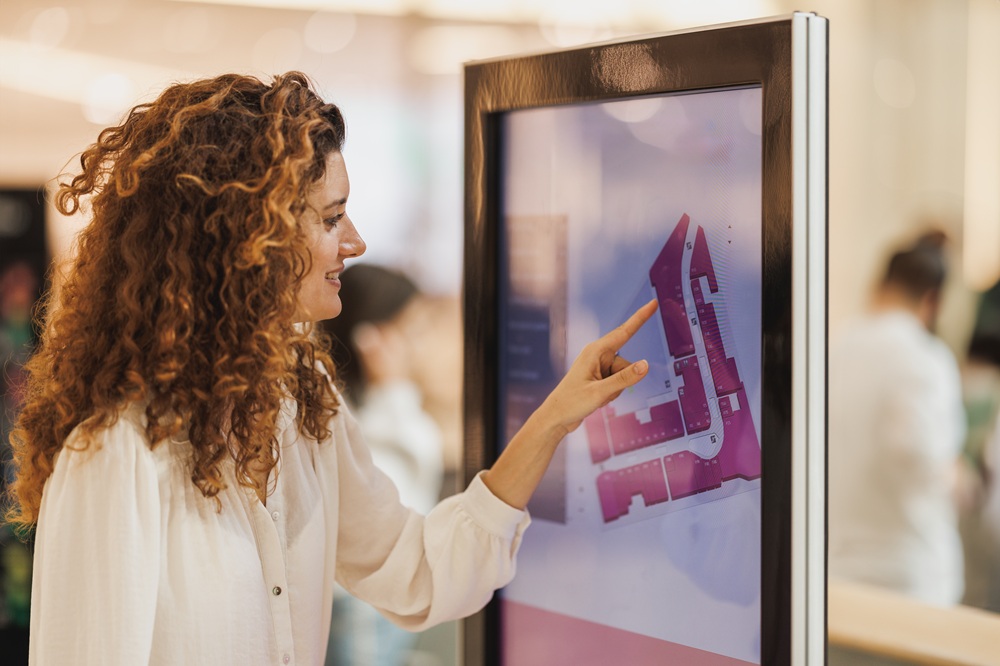
Don’t assume you’re priced out of modern booth tech. With companies like Padzilla offering large-scale touch displays as rentals, it’s possible to compete at the same experiential level as bigger brands without the expense of owning the hardware.
That opens the door for small teams to punch above their weight. When your screen draws a crowd, no one’s asking what your annual revenue is.
Integrate, don’t overwhelm
Here’s the trap: adding technology just for the sake of looking modern. Don’t underestimate your visitors; they can tell the difference. If your demo needs a staff member hovering nearby just to explain how to use it, it’s already lost.
Your tech should be:
- Instantly usable without instruction
- Visually self-explanatory from a distance
- Embedded with data collection or engagement tracking in a non-intrusive way
The best setups let the experience speak for itself while quietly giving your team everything they need to qualify leads and follow up after the show.
4. Content Will Be Created Live on the Show Floor
In 2026, the smartest booths will be producing content in real time. Trade shows have ceased to be a place where content is handed out and forgotten. They’re becoming engines that generate valuable, sharable material while the in-person event is happening.
The booth becomes your media studio
What used to be a post-show scramble to gather photos and write recaps is now baked into the booth strategy itself. Exhibitors are setting up with the clear goal of leaving the show with video interviews, social-ready clips, demo recordings, customer soundbites, BTS footage, etc.
It’s not fluff. It’s fuel – for LinkedIn, email, reels and YouTube. And when it’s created while the energy is high, the content hits different.
User-generated content will explode your reach
Give attendees something worth capturing and they’ll do your trade show marketing for you. A touchscreen leaderboard. A gamified product challenge. A shareable photo op. These don’t only engage the booth but also multiply visibility far beyond the floor.
Each tag, mention and repost becomes a digital breadcrumb that leads new prospects back to you. That’s exposure for you without another ad spend.
Livestreaming is no longer a nice-to-have
More exhibitors will livestream from their booths whether it’s a new product reveal, a Q&A with the founder or a walkthrough of their setup. And audiences expect polish.
And no, you don’t need a broadcast team. A phone on a tripod and someone who knows how to talk on camera goes a long way. But the key is planning ahead: What will be livestreamed? Who’s watching? How will they engage?
Capture first, repurpose later
The best post-show event marketing in 2026 starts during the show. Your sales deck could feature real customer interactions. Your email campaign could include a product demo filmed in the booth. Your blog could be built around lessons learned on the floor.
The booth is a content strategy in motion.
5. Data Will Separate the Winners from the Wannabes
The gap between booths that look good and booths that perform well is about to get wider and data is the dividing line.
You can’t optimize what you don’t measure
In the upcoming year, real trade show ROI won’t come from vague impressions or gut feel. It’ll come from hard numbers:
- Dwell time
- Click paths on interactive screens
- Engagement heatmaps
- Lead source tracking
- Conversion-ready follow-ups
The booths that win will have analytics embedded into their trade show booth design.
Smart tech isn’t just for show
RFID tags, NFC chips and touchscreen usage logs are giving exhibitors insight into what people engaged with, how long they stayed and what actions they took next. That’s the kind of data that helps sales teams close deals faster.
No more “we had a good crowd” post-show summaries. You’ll know who interacted, what they cared about and where they dropped off.
Qualifying leads starts before the badge scan
A badge scan from someone who tapped through your product builder and spent five minutes exploring is worth 10x more than one from a passing browser.
Come 2026, high-performing teams will score leads based on actual behavior.
Post-show data will shape next quarter’s strategy
The booths that succeed next year will be the ones learning from this year in 2025. What content drew crowds? Which call-to-action worked best? Where did visitors spend the most time?
Your booth becomes a testing ground. Every screen and piece of content tells you something. And if you’re listening, you’re building a better booth for the next show before this one’s even done.
6. Personalization Will Extend to the Booth Itself
For years, personalization lived in emails and landing pages. In 2026, it’s coming to your booth, because attendees are tired of one-size-fits-all experiences.
People expect tailored experiences everywhere
They’ve gotten used to Netflix recommendations and Instagram ads that actually know them and their unique individual tastes. That expectation doesn’t disappear when they walk into a trade show exhibit. If anything, it’s only going to be amplified.
Trade show exhibitors who win will meet attendees with experiences that reflect their interests, roles or industry without them having to explain themselves first.
Booths will adapt in real time
Using data from app registrations, badge scans or even LinkedIn lookups, booths can now trigger personalized content sequences on touchscreens or tailor demos by persona.
For example:
- A hospital administrator sees case studies on operational efficiency.
- A clinician sees treatment outcome dashboards.
- A distributor sees logistics and pricing tools.
Same screen, different story, depending on who’s in front of it.
Dynamic content > static displays
Forget looping videos. Imagine walking up to a screen and seeing your company name in the interface or choosing your role and watching a tailored walkthrough.
Even better: integrating it with a pre-show registration form that lets visitors select their interests before they arrive, unlocking content that speaks directly to them.
Personalization deepens engagement and shortens sales cycles
Make attendees feel like a booth was built for them so they stick around and trust faster.
The 2026 booths that drive the best trade show leads will be those that made visitors feel seen without ever having to say a word.
7. Sustainability Will Influence Buyer Perception
A trade show design can feel high-tech and still leave a bad taste if buyers see waste where they expect values.
Sustainability is a must
In 2026, sustainability won’t be a footnote or a last-minute checkbox. It’ll be a decision-maker. Buyers (especially Millennials and Gen Z) are actively watching how brands show up. Not just what you say, but how you build, ship and dispose.
They’re counting materials, noticing giveaways and asking: Did this booth really need to exist like this?
Wasteful booths signal outdated thinking
Mass-printed brochures. Single-use banners. Piles of swag that end up in hotel trash cans. These are the things people post on LinkedIn to shame.
And when your competitor reuses modular materials, runs a paperless booth and features carbon-neutral messaging, guess who marches away with the higher perceived value?
Small changes speak volumes
But this is not to say you have to overhaul everything. Just rethink key pieces:
- Replace paper with QR codes or touchscreen content
- Use rented modular displays instead of single-use builds
- Offer practical, high-quality swag people actually use
- Offset travel emissions and display that commitment proudly
More than about optics, it’s about showing buyers your values align with theirs.
Takeaway: waste is visible. So is effort.
When attendees see a booth built responsibly, it feels thoughtful. And thoughtfulness earns trust.
In 2026, the booths that win will be the ones that make an impression without leaving a footprint.
8. Pre- and Post-Show Strategy Will Matter More Than Ever
It goes without saying that the trade show doesn’t start when the doors open – and it sure doesn’t end when the carpet is rolled up.
Booths are just the middle of the funnel
Too many teams still treat the booth as the whole play: Show up. Talk to whoever walks by. Pack up. Go home.
But in the year ahead, that kind of passive approach won’t cut it. The brands seeing the strongest ROI are keen on kickstarting the conversation long before day one and keep it alive long after.
Pre-show marketing separates the ghost towns from the hotspots
Every attendee is walking in with a schedule and limited energy. What you can do:
- Send teaser emails and calendar invites
- Book meetings in advance
- Publish what you’ll be demoing (and why it matters)
- Promote your booth’s experience on social and event platforms
Post-show silence is a growth killer
The energy of the show wanes fast. A hot lead can go cold in 48 hours if you’re not ready.
Follow-up should be proactive, personalized and relevant to what they saw at your booth.
Keep the momentum going or your competitors will.
The full lifecycle mindset wins
2026 will reward exhibitors who view the booth as a key moment in a larger journey, not the journey itself.
If you’re not showing up early and staying present afterward, don’t be surprised when your trade show ROI flatlines.
9. Smart Rentals Will Overtake Owned Tech
Why buy what you only need 3x a year?
The cost of ownership is starting to show
That massive screen you bought in 2021? It’s outdated. The software is glitchy. And your team is still figuring out how to transport and mount it without wrecking the crate.
Ownership sounded smart UNTIL you realized you’re stuck with maintenance, logistics, storage and upgrades. Meanwhile, the brands renting are showing up sleeker, faster and more prepared.
Rentals are not second-tier
A few years ago, rental gear was “Plan B.” But in ‘26, companies like Padzilla are making high-end tech accessible without the baggage. Exhibitors can now:
- Get the latest interactive trade show displays (55″, 65″ or bigger)
- Run custom experiences with plug-and-play ease
- Receive setup support, live troubleshooting and pre-show testing
- Scale their booth tech up or down based on venue and budget
It’s flexible. It’s powerful. And it performs without the long-term drag.
Smart teams are shifting to an on-demand model
Why risk sinking capital into equipment that may sit in storage 300 days a year, when you can budget for performance per event? It’s a mindset shift: Tech is now a strategic resource.
The outcome? Cleaner booths, fresher content, lower stress (and more importantly, higher ROI).
The Immediate Future of Trade Shows Will Belong to the Adaptable.
The playbook for trade show success has changed, not necessarily drastically, but it’s changing faster than most exhibitors are ready for.
In 2026, you’re competing with expectations shaped by Netflix, YouTube, TikTok and the world’s best brand experiences. Attention is earned. Value is expected. And the winners are those who treat every square foot of their booth like it’s a live-stage performance that can’t be phoned in.
As for the teams that make those choices now? Twenty-twenty-six won’t just be another year on the expo floor. It’ll be the year they stop getting passed by and start becoming the booth everyone else is trying to catch up with.
If you need tech to help you make a statement at your next trade show, Padzilla can help. Book a demo today.


