
Trade Show Insights, Upcoming Events
Trade Show Booth vs Competitor: How to Win the Aisle
It’s 10:15 on day one. Your trade show booth design looks exactly like the render, your team has fresh badges and the lead scanner works on the first try.
Then a crowd forms across the aisle. Your competitor has people three deep at their booth, and your two reps are checking their phones. It stings, especially when you know your product is better. Their product probably isn’t the reason, though. Attendees walking that aisle aren’t comparing spec sheets – they’re making a split-second call based on what they can see from 20 feet away.
Below, we’ll break down what attendees register when they walk past, where a bigger competitor booth has a real edge and how to win the aisle without matching their big spend.
Key Takeaways
- Attendees decide in seconds. Sightlines and movement do most of the work before anyone reads your signage.
- Bigger booths buy visibility. They don’t automatically buy conversations or qualified leads.
- Interaction holds people. A booth that gives visitors something to do keeps them longer and hands your staff an easy opener.
- Scope out your competitor early. A little pre-show research lets you plan a counter instead of reacting on day one.
- Most lost traffic is self-inflicted. Blocked entrances, looping videos and idle staff send people to the booth next door.
The Three-Second Aisle Test
Attendees move through a trade show floor the way you scroll a feed. Eyes skim and feet keep moving until something breaks the pattern.
Your booth gets a few seconds of peripheral attention. In that window, a passerby is asking whether anything is happening there and whether it’s for them.
What they see from 20 feet out
Height and sightlines come first. If your competitor’s header sign clears the booth line and yours sits at eye level behind a table, they win the long view. That happens before anyone reaches your carpet.
Something moving
The eye catches motion before it reads words. A printed backdrop, however well designed, is wallpaper to someone scanning the aisle. A screen with people playing on it reads as activity, and activity draws a crowd.
A reason to step in
This is where most booths lose. Attendees need to see what they’d actually do if they stopped. A game on a giant touchscreen answers that instantly. A table stacked with brochures answers it too, just not in your favor.
PRO TIP: Before doors open, walk your aisle from both directions and film it on your phone at walking pace. Do the same past your competitor’s booth. Watch both clips back and note which one your eye lands on first.
Where Your Competitor’s Bigger Booth Has the Edge
Be honest about this part. A bigger budget buys real advantages:
- Height: taller structures and hanging signs visible across large exhibition halls
- Square footage: room for a crowd without the booth feeling cramped
- Placement: large exhibitors often get first pick of spots near entrances and main aisles
- Name recognition: some attendees already know the brand and plan their visit ahead of time
What size can’t buy is a reason to stay. A 20×40 island booth with static graphics and a sales team posted at the edge feels like a hotel lobby. People glance at it on their way to somewhere else.
That gap is your opening.
Main Types of Trade Show Booths
Once you’ve picked the right trade show, your booth type shapes how attendees approach you and how you measure up against the competitor across the aisle. Each format plays differently in crowded trade show environments.
Inline Booth
An inline booth has one open side facing the aisle, with neighbors on both sides. Most 10×10 and 10×20 spaces are inline, which makes them the usual starting point for first-time exhibitors and smaller budgets. Attendees can only approach from the front, so whatever faces the aisle has to do all the work.
Corner Booth
A corner booth sits at the end of a row and is open on two sides. That second side catches people turning off the main aisle.
Perimeter Booth
A perimeter booth lines the outer walls of the hall. It usually allows a taller back wall than an inline space, so height becomes your best tool for being seen from the center aisles. Check your show’s exhibitor manual for the exact limit.
Peninsula Booth
A peninsula booth is open on three sides and usually anchors the end of a row. The extra space gives you room for a demo area and a spot for conversations without either one feeling crowded.
Island Booth
An island booth is open on all four sides. It carries the most visual impact on the floor and the highest price tag. When a competitor outdraws you, this is often the setup you’re up against.
Modular Booth
This one describes how the booth is built. Modular trade show booths use reconfigurable panels and frames, so the same kit can fit a 10×10 at one show and a 10×20 at the next. It suits exhibitors who attend several shows a year.
A smaller footprint can still hold its own against an island across the aisle. The rest of this guide shows how.
Static Booth vs. Interactive Booth: A Side-by-Side Look
Say two booths face each other across the same aisle. One has a backlit graphic wall and a brochure rack. The other has a giant touchscreen running a 60-second product quiz with a live leaderboard.
| Static Booth | Interactive Booth | |
| Draw from the aisle | Relies on graphics and booth height | Motion and people playing are visible from down the aisle |
| Time at the booth | Short; most visitors grab a brochure and go | Longer; games and self-guided demos hold people while they play |
| Conversation starter | Staff opens cold (“Can I tell you about…”) | The activity opens it (“How’d you score?”) |
| Lead capture | Badge scans or business cards | Contact info entered inside the experience |
| Post-show data | Scan count and staff notes | Taps, completions and top content, which make ROI easier to prove |
The interactive booth also changes your staff’s job. Instead of guarding the entrance, they’re hosting. Someone finishes the quiz, and your rep already has a natural first line.
How to Size Up a Competitor’s Booth Before the Show
You don’t have to wait until setup day to find out what you’re up against. Most of it is public.
Study the floor plan
Find their booth number in the exhibitor directory. Note their size and how close they sit to entrances and main aisles. Check whether they’re directly facing you.
Look at their last two shows
Search LinkedIn, Instagram and the event hashtag for photos. If their booth looks the same both years, you know what’s coming.
Watch their pre-show promotion
Exhibitors announce giveaways, demos and guest appearances in emails and social posts. If they’re promoting a 2 p.m. drawing, expect the aisle to get busy around then and plan your own activity for the same window.
Ask your sales team
Your reps have likely bumped into this competitor at other shows or heard about their setup from prospects. Five minutes of their input can save hours of guessing.
PRO TIP: Keep a shared folder of competitor booth photos from every show you attend. After a year, their habits become obvious and you can plan against them.
How to Win the Aisle Without Outspending Your Trade Show Booth Competitors
Give People Something to Do
Interactive booth experiences are the cheapest way to beat square footage. A trivia game tied to your product, a spin-to-win, a digital scavenger hunt or a self-guided catalog gives a passerby a reason to stop for 60 seconds. Once they’re playing, they’re in your booth.
Put the Screen Where the Aisle Can See It
A touchscreen against the back wall only works for people already inside. Angle it toward the heaviest foot traffic for maximum engagement, so the people playing become your advertising.
Pro tip: If your competitor sits across from you, face your screen toward the direction most attendees walk in from. They’ll see your activity a few steps before they reach the other booth.
Capture the Lead Inside the Experience
Ask for an email to see the final score or claim the prize. Visitors hand it over because they want the result. The data can sync to your CRM, so nobody is typing up business cards on the flight home.
Staff the Experience
Your best rep shouldn’t stand at the edge of the carpet holding a scanner. Put them next to the screen, cheering on players and asking follow-up questions. Hosting feels like an invitation. Guarding feels like a sales pitch.
Mistakes That Push Traffic to the Booth Next Door
- A wall of staff at the entrance. Two reps standing shoulder to shoulder at the front edge look like a checkpoint. Attendees drift to the other side of the aisle.
- Video on a loop. A sizzle reel nobody can touch blends in after the first pass. Attendees have seen dozens of them by lunch.
- Brochures as the main event. If paper is the only thing to take, most of it ends up in a hotel trash can.
- Phones out during slow stretches. Quiet hours are when attendees finally have time to stop. A team scrolling their phones tells them the booth is closed.
Padzilla in the Aisle
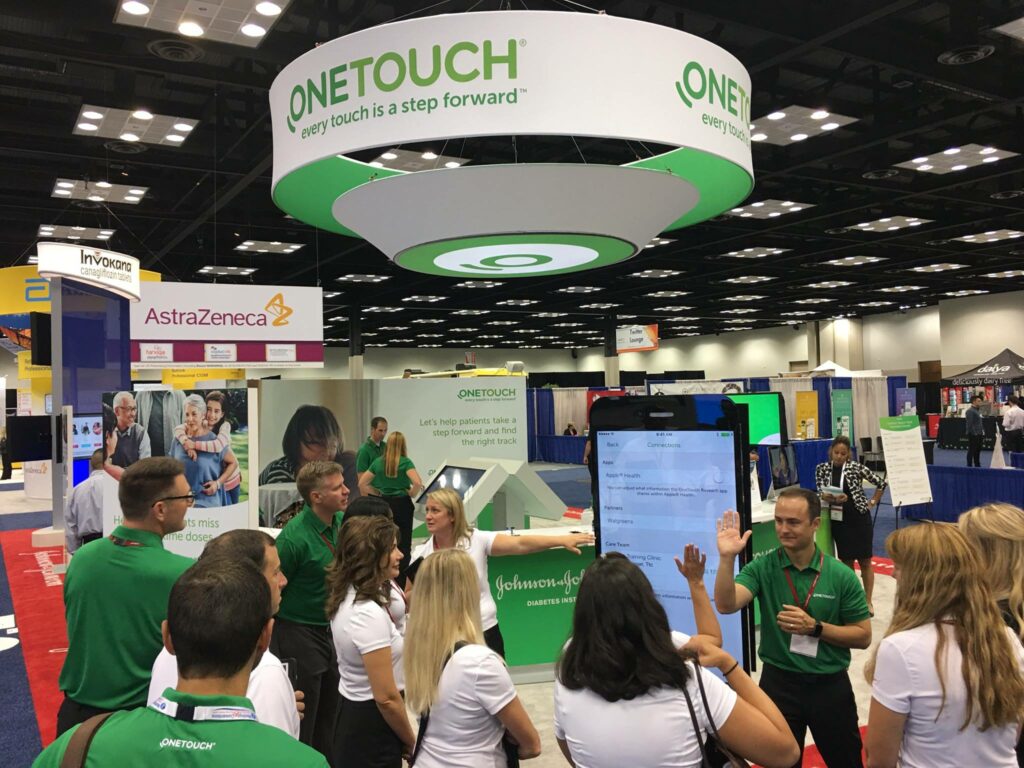
Padzilla rents giant interactive touchscreens, including our oversized iPhone, for trade show exhibits that need to pull attention away from bigger setups. Exhibitors run custom apps on them: product demos, trivia games, scavenger hunts, virtual catalogs and sign-up forms that feed straight into a CRM.
The size gets you noticed from down the aisle. The immersive interaction keeps visitors there long enough for your team to start a real conversation.
Make Your Booth the One They Cross the Aisle For
You can’t control how big your competitor’s booth is. You can control what happens inside yours.
Tell us which show you’re heading to and who’s across the aisle. We’ll help you plan brand experiences that pull people your way.
Frequently Asked Questions (FAQs)
How do I make my trade show booth stand out from competitors?
Focus on what attendees notice from a distance: height, movement and a visible activity. An interactive element like a touchscreen game gives passersby a clear reason to stop, which a static trade show display can’t do on its own.
Does a bigger trade show booth get more traffic?
A bigger booth usually gets more visibility, especially with tall structures and a prime location. Visibility doesn’t guarantee people will stay, though. Smaller booths often hold visitors longer when they offer something hands-on.
How can I find out what a competitor is bringing to a trade show?
Check the exhibitor directory and floor plan for their booth size and location. Then look at photos from their past shows on LinkedIn and Instagram, and watch their emails and social posts for announced giveaways or demos.
What keeps attendees at a trade show booth longer?
Activities with a clear start and finish, like a 60-second quiz or a leaderboard game, hold attention well. Staff who host the activity and ask questions afterward keep the visit going once the game ends.
How do I get more leads than the booth across the aisle?
Build lead capture into the experience itself, such as asking for an email to reveal a score or claim a prize. Visitors share their info willingly when they want the result, and the data can go straight into your CRM.
Level up your displays with Padzilla.
If you’re looking to make a lasting impression consider using Padzilla to create a better experience that they won’t forget. Contact Crunchy Tech today to learn more about how Padzilla can elevate your business.