
Trade show floors are expensive battlegrounds. If you’re spending $50k on a 10×20 space just to hand out cheap pens and hope for, uhm, brand awareness, you’re basically lighting money on fire.
In 2026, the metric to put a premium on is engagement that converts. That being said, you need a tech stack that stops traffic and proves your ROI before the carpet is rolled up.
If you’re on the lookout for the best marketing tools for trade shows, we’ll break down the essential toolkit for both first-time and experienced exhibitors who play to win.
Let’s get started!
1. Eliminate the Paper Trail With Precision Lead Capture
The fishbowl-for-business-cards is a relic of the 90s. If your sales team is leaving a three-day show with a pocket full of crumpled paper and no context on who those people are, you’ve failed. Modern lead capture is, more than just about grabbing an email address, about instant qualification and data hygiene so your follow-up is surgical.
You need a system that removes the human error of manual entry and replaces it with a direct pipeline to your sales stack.
Use universal lead capture apps for cross-show consistency
Don’t get stuck using the overpriced, clunky scanners rented out by the trade show organizer because they’re often outdated and the data delivery is delayed by days.
By owning your own software you ensure your team stays trained on one interface regardless of the city you’re in. This allows you to set up mandatory qualifying questions that staff must answer, such as budget or decision-making authority, before the record is even saved.
Most importantly, make sure the tool has a robust offline mode; convention center Wi-Fi is notoriously trash, and you can’t afford to lose a $100k prospect because the signal dropped.
Sync your booth data directly to your CRM in real-time
A lead’s interest has a short half-life, and waiting until Monday morning to upload a CSV file to Salesforce is a death sentence for your conversion rate. The second a badge is scanned, your CRM should trigger a “Nice to meet you” email that isn’t a generic template but a targeted message containing the specific white paper or case study they requested.
This immediate routing allows your high-priority “hot” leads to be flagged for an account executive back at the office who can reach out while the prospect is still walking the floor. It creates a level of responsiveness that your competitors simply can’t touch.
2. Leverage AI-Powered Analytics to Track Foot Traffic
You wouldn’t run a digital ad campaign without tracking clicks and impressions, so STOP treating your physical booth like a black box.
“It felt busy” is a sentiment, not a reportable metric that satisfies a CMO. You need hard data to justify that premium corner-spot spend and to understand how people actually move through your space so you can optimize your layout for the next event.
Monitor dwell time with anonymous spatial sensors
Stop guessing which pedestal or demo station is attracting the most interest and start looking at the actual hot zones of your floor plan. Tools like Zenus or Density use AI-powered sensors to create real-time maps of where people congregate and where they are walking right past.
This data is pure gold for staffing. If the numbers show a massive spike in traffic every day at 1:30 PM, you know exactly when to pull your team off their lunch breaks to make sure no one walks away unassisted.
Analyze attendee sentiment and demographics without infringing on privacy
Modern sensors can now tell you more than just “someone was there” by providing aggregate data on the age, gender, and even the “sentiment” of your visitors.
These tools detect dwell time, which measures how long a person stands in front of a specific display: if they stay for more than two minutes, that’s a high-quality engagement worth investigating.
Because these systems are typically privacy-first and don’t store personal identifiable information, you get the deep psychological insights into your audience’s reaction to your messaging without the GDPR or legal headaches.
3. Replace Passive Presentations With Interactive Content
The era of the looping PowerPoint is over, and if your screen is just a digital poster, people will treat it like one. In 2026, prospects don’t want to be talked at; they want to drive the experience themselves through a choose-your-own-adventure style interface.
Your content needs to be an active participant in the sales process that solves specific problems rather than just shouting features at a crowd.
Deploy self-service product configurators
Your booth staff can’t be everywhere at once, and when the floor gets slammed, a self-service kiosk becomes your most valuable player. By giving visitors an interface where they can input their industry, company size, and specific pain points, you let them build their own solution in real-time.
This organic engagement should always end with a “Send to Self” button, which captures the lead by offering to email them their custom configuration or quote immediately, providing a tangible takeaway without a high-pressure pitch.
Gamify the education process to increase retention
People are competitive by nature. Turning your value proposition into a 30-second challenge is a proven way to keep a line around your booth. Use a tablet-based quiz where the answers are hidden within your booth graphics, forcing attendees to actually read your messaging as opposed to just glancing at your logo for the free swag.
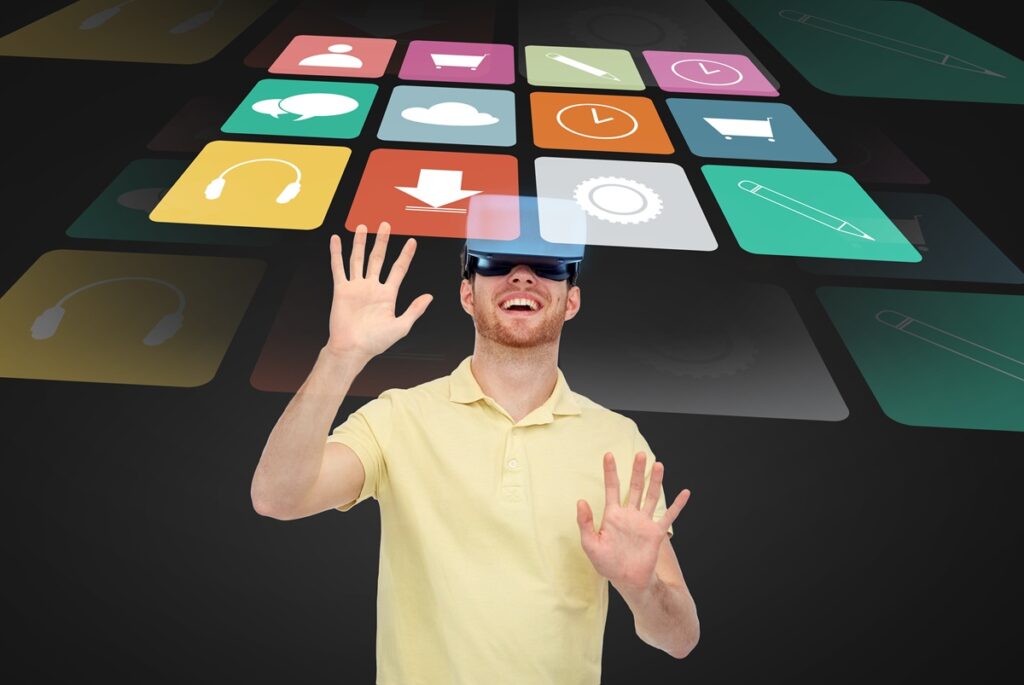
For brands with complex hardware, Augmented Reality (AR) allows you to show under-the-hood views or 3D exploded diagrams that make your product’s internal engineering the star of the show. It makes the experience both tactile and unforgettable.
4. Master Pre-Show Buzz With Account-Based Marketing (ABM)
Winning the trade show starts weeks before the union crews even start laying the carpet. If you’re relying solely on booth traffic from random attendees wandering the aisles, you’re leaving your ROI to chance.
The most elite exhibitors in the industry treat the show floor as a closing environment for high-value targets they’ve been grooming for MONTHS.
Send “Golden Ticket” digital invites to your top-tier prospects
Generic mass emails that say Visit us at booth #402 are a waste of server space and usually end up in the spam folder.
Instead, build a dedicated landing page for your top 50 must-win accounts that features a personalized video invite from their specific account executive.
You can increase the stakes by offering a booth-only incentive, think a high-end tech gadget or an exclusive invitation to a private VIP happy hour, which requires them to pre-schedule a 10-minute demo. This ensures your calendar is packed with qualified meetings before you even check into your hotel.
Use geo-fenced social advertising to own the digital airspace
You don’t need a million-dollar ad budget to dominate the conversation if you target your spending with surgical precision. By setting up a geo-fence around the convention center and the surrounding official hotels, you can serve LinkedIn and Instagram ads exclusively to people physically present at the event.
Run ads that highlight a specific problem-solver demo or a live guest speaker at your booth. This constant digital presence creates a psychological omnipresence effect and makes your brand feel like the biggest player at the show, regardless of your actual booth square footage.
5. Command the Floor with Padzilla’s Giant Interactive Touchscreens
Everything we’ve discussed – lead capture, interactive demos, and gamified content – hits harder when it’s scaled up to a massive, impossible-to-ignore format.
This is where most booths fail.
They spend a fortune on graphics but then try to show off their cutting-edge software on a tiny 13-inch tablet or a non-interactive TV mounted six feet high. Padzilla changes that dynamic by turning your actual software into a skyscraper-sized interactive experience that functions exactly like a giant iPhone.
Stop huddling around a tiny tablet and start presenting
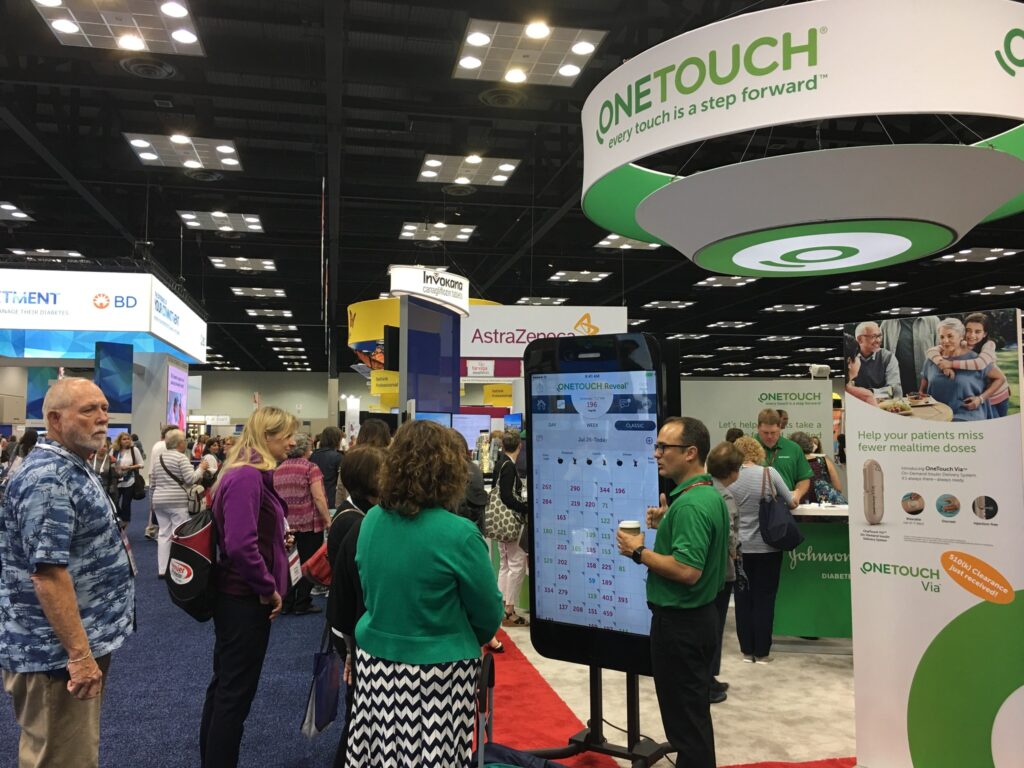
Nothing kills a sales vibe faster than three grown adults in suits squinting at a small iPad while a salesperson frantically swipes through a menu. Padzilla removes that friction by providing a massive, high-definition canvas that allows a group of ten people to watch a demo simultaneously.
Because the interface is a 1:1 hardware skin of a mobile device, there is zero learning curve for your staff or the attendees. If you can tap, pinch, or swipe on a phone, you can operate a Padzilla, making the technology transparent so the focus stays entirely on your product’s value proposition.
Showcase your real software instead of a canned video
Prospects at trade shows are inherently skeptical and they can smell a “rendered” or “canned” demo from a mile away. They want to see how your tool actually works in the wild. Padzilla allows you to run your native iOS or Android app directly on the big screen with zero lag, providing an authentic look at your user interface and functionality.
This level of transparency builds immediate trust because you’re showing the real deal. Whether you’re navigating complex 3D medical models, scrolling through a massive data dashboard, or demoing a mobile checkout flow, the sheer scale of the interaction turns a standard sales pitch into a memorable event.
Drive frictionless engagement through familiar UX
The biggest barrier to booth interaction is the fear of the unknown. Attendees often hesitate to touch a weird, custom-coded kiosk for fear of breaking it or looking lost. Padzilla solves this by using the most familiar user interface on the planet.
When people see that recognizable home button and the familiar swipe-to-scroll physics, they don’t need an instruction manual to engage with your brand. They walk up, they interact, and they become a lead because you’ve removed every ounce of tech-friction from the equation.
It is the ultimate gravity well for any exhibitor who wants to own the room and leave the competition looking like they’re stuck in the dark ages.
Stop Playing Small in a Big Room.
The trade show floor is a high-stakes environment where you only get one shot to grab a passing executive’s attention. If you want to actually dominate the hall, you have to break the visual monotony and provide an experience that feels as intuitive as the phone in your prospect’s pocket – just at a massive, impossible-to-ignore scale.
The strategy is simple: combine the best lead capture and analytics tools with a centerpiece that acts as a visual gravity well for the entire aisle. When you stop pitching at people and start inviting them to interact with your brand on a giant, familiar interface, the dynamic shifts from a sales cold-call to a collaborative discovery.
Turn your booth into the most talked-about spot on the floor. Book a Padzilla demo or a custom consultation today and let’s scale your impact.


